

Let's get something straight right off the bat: Prop 19 changed the game for California families, and there's no magic loophole that'll make it disappear. Since February 2021, the rules around passing property to your kids have gotten a lot tighter. But here's the thing—while you can't avoid Prop 19, you can absolutely work with it instead of against it.
The reality is that many families are getting blindsided by property tax bills they never saw coming. I've seen tax increases that jump from $3,000 to $15,000 annually on inherited properties. That's not a typo. But with the right planning, your family doesn't have to become another casualty.
What Prop 19 Actually Changed (And What It Didn't)
Before we dive into solutions, let's talk about what we're dealing with. Prop 19 didn't eliminate all property tax benefits for inherited property, it just made them way more restrictive.
For official guidance, see the California Board of Equalization's Prop 19 resource page.
The new rules:
- Only your primary residence can be passed down with the old tax assessment
- Your child has to actually live in the house as their primary residence
- They've got one year to move in, or the county reassesses everything
- The tax break is capped at $1 million above your current assessed value
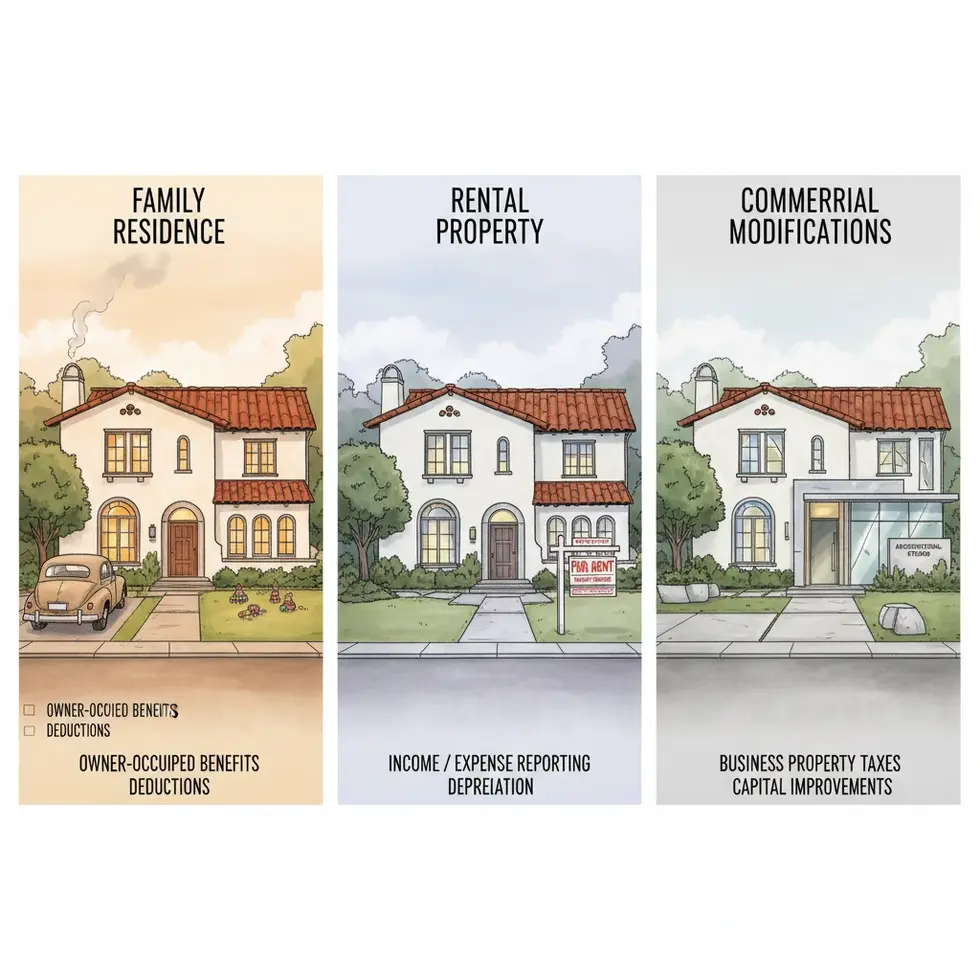
- Rental properties, vacation homes, and commercial real estate? They're getting reassessed no matter what
What this means in practice:
That beach house in Malibu that's been in your family for decades? Your kids are going to pay current market value property taxes on it unless they're willing to make it their primary home.

Update Your Existing Trust Documents
Here's the uncomfortable truth: if your trust was written before 2021, it's probably outdated. Most estate planning documents were drafted assuming the old rules would stay in place forever. Now those same documents might be setting your family up for a massive tax hit.
What needs reviewing:
- Distribution language that doesn't account for the primary residence requirement
- Beneficiary designations that might trigger unnecessary reassessments
- Trust provisions that assume property tax benefits will transfer automatically
I recently worked with a family whose 2018 trust directed that their Palo Alto home go to their daughter in San Diego. Great intention, but under Prop 19, she'd face a $20,000+ annual property tax increase unless she moved to Palo Alto. A simple trust amendment gave the trustees flexibility to either sell the property and distribute proceeds or transfer it only if she planned to relocate.
Action step: Schedule a trust review with an attorney who understands how Prop 19 intersects with estate planning. This isn't just about property law, it's about making sure your entire estate plan still works.
Lifetime Transfers: Proceed With Care
Lifetime transfers don't “solve” Prop 19. They can still trigger reassessment unless the recipient qualifies and actually uses the home as a primary residence within required timelines. In some cases, a well-timed transfer can support family goals and timing, but it's not a workaround.
How this can help (in the right facts):
- Parents may gift or sell property to children during life to coordinate timing
- Planning considers the recipient's ability to establish primary residence and file on time
- Can align cash flow and management, if done within legal requirements
What to watch out for:
Federal and state gift tax rules, basis and capital gains implications, loss of control once transferred, and the risk of reassessment if the primary residence criteria aren't met.
Plan Around the Primary Residence Requirement
Since Prop 19 only preserves tax benefits for primary residences, smart planning means working with this requirement, not against it.
Practical approaches:
- Have honest family conversations about who actually wants to live in the property
- Consider which child is most likely to relocate if necessary
- Plan for the one-year timeline to establish primary residence
- Structure trusts to give trustees discretion based on beneficiaries' housing plans

Real-world example:
I worked with parents who owned a home in Santa Barbara. Their older son lived in Los Angeles and loved city life, while their younger son had always talked about moving somewhere quieter. Instead of defaulting to the older son, they structured their trust to transfer the property to whichever child would actually use it as their primary residence. The younger son ended up making the move, and the family saved thousands in annual property taxes.
Case Study: Santa Barbara Family—Why Precise Trust Language Matters
An anonymized example: A family with two children owned a Santa Barbara home. Their trust was drafted to give the entire home to the one child who actually established it as a primary residence within the required timeframe—not split 50/50 and not left vague. The child who moved in received the whole property directly, qualified for the Prop 19 homeowner transfer exclusion, and saved thousands in annual property taxes.
What could've gone wrong: If the trust had kept things open-ended or divided the home equally between both kids, only the portion owned and used as a primary residence would have qualified. That invites partial reassessment by the local assessor and a much higher blended tax bill.
Two planning takeaways:
- Use precise, plain-English instructions in the trust so there's no doubt about who should receive the residence for Prop 19 purposes.
- Either authorize the trustee to select the qualifying child based on who will live there, or specifically name the beneficiary who will meet the primary residence requirement.
Best practice: If preserving the low tax base is the goal, build the directive right into the document—give the trustee clear authority to select the qualifying child, or name the intended beneficiary who will actually claim the home as a primary residence and timely file for the exclusion. This isn't a workaround—it's straightforward, compliant drafting.
Life Insurance Trusts: Practical Liquidity, Not a Workaround
When reassessment is likely or unavoidable, an Irrevocable Life Insurance Trust (ILIT) can provide tax‑efficient liquidity to cover higher property taxes and carrying costs. An ILIT doesn't avoid Prop 19. It simply funds the bill so heirs can keep properties without a forced sale.
- Purpose-built liquidity: Policy proceeds can be directed to pay property taxes first, then maintain reserves for insurance, repairs, or HOA dues.
- Clear instructions: Trust language can prioritize tax payments and set guidelines for distributions so funds aren't diverted.
- Efficient funding: Premiums can be gifted to the ILIT using annual exclusions or integrated into your broader gifting plan.
- Coordinated design: We align policy type and structure with your CPA and insurance professionals.
Bottom line: ILITs are a practical, compliant adjustment for families who want to keep legacy real estate despite higher taxes.
Alternative Structures: Helpful, But They Don't Avoid Reassessment

LLCs, Family Limited Partnerships, and charitable trusts won't avoid Prop 19 reassessment. They can still deliver legal, tax, and management benefits that make ownership smoother in a Prop 19 world.
Limited Liability Companies (LLCs):
No Prop 19 avoidance, but they offer liability protection, centralized management, and easier transition of control across generations.
Family Limited Partnerships (FLPs):
Potential gift and estate tax valuation discounts and governance structure—useful when property tax benefits are limited.
Charitable Trusts (e.g., Charitable Remainder Trusts):
Won't stop reassessment on transfer to heirs, but can create income streams, diversify concentrated positions, and support philanthropy with possible income and estate tax advantages.
Structured Intra-Family Sales:
A planned sale can transition ownership while providing the current generation with income and aligning basis planning with overall estate objectives.
Important note: None of these structures are magic bullets that avoid Prop 19. But they can provide other benefits that help families manage the overall impact of the new rules.
The Liquidity Challenge (And How to Handle It)
Here's what many families don't realize until it's too late: Prop 19 often creates a liquidity problem. Your kids might inherit a valuable property but not have the cash flow to handle dramatically increased property taxes.
Planning solutions:
- Life insurance designed to provide liquidity for property tax payments
- Structured payment plans for property transfers
- Rental income strategies for inherited properties
- Family lending arrangements to help beneficiaries manage increased costs
I've seen too many families forced to sell inherited properties simply because they couldn't afford the new tax burden. A little advance planning can prevent this outcome.
When Reassessment Is Inevitable: Use Life Insurance to Keep the Property in the Family
Prop 19's exclusions are limited. For most non‑primary residences—rental properties, vacation homes, and commercial real estate—a property tax reassessment is inevitable when the next generation takes over. If your family's goal is to keep legacy California real estate, plan for the tax bill, not around it.
How life insurance planning helps:
- Dedicated trust for liquidity (ILIT): An Irrevocable Life Insurance Trust can own a life insurance policy designed to create tax-free liquidity when it's needed most. The trustee can be directed to use proceeds to fund future property tax payments, set aside reserves, or support other ownership costs so heirs aren't forced to sell.
- Offsets the financial shock: While an ILIT doesn't avoid Prop 19 reassessment, it can offset the increased property taxes and stabilize cash flow, helping your heirs keep treasured properties in the family.
- Practical and compliant: This is not a loophole or workaround. It's a straightforward, compliant strategy that accepts Prop 19 and plans for it proactively.
What an ILIT plan can look like:
- Right-sized policy: We model expected reassessment and future property tax increases, then size the policy to cover a targeted number of years (for example, 10–15 years of taxes).
- Clear trustee instructions: The ILIT can include guidelines to pay property taxes first, then maintain a sinking fund for repairs, insurance, or other carrying costs.
- Efficient funding: Premiums can be gifted to the ILIT using annual exclusion gifts or other methods your overall estate plan supports.
- Coordinated design: We coordinate with your CPA and insurance professionals to align policy type (e.g., guaranteed universal life or whole life) with your risk tolerance and estate planning timeline.
Who should consider this:
- Families with high-value properties that won't qualify for the homeowner transfer exclusion
- Heirs who want to keep legacy real estate but may not have the liquidity to shoulder a new tax bill
- Owners who want a practical, predictable way to fund property taxes without tapping investment portfolios or forcing sales
Bottom line: Life insurance inside a well-drafted ILIT won't change Prop 19, but it can change the outcome for your family by providing the liquidity to keep properties you care about—without scrambling or selling.
What About Commercial and Investment Properties?
Let's be clear: Prop 19 basically eliminates property tax benefits for commercial real estate and investment properties passed to children. These properties will be reassessed at current market value regardless of your planning.

Your options:
- Accept the reassessment and plan for increased costs
- Consider selling before death and investing proceeds differently
- Use 1031 exchanges during your lifetime to consolidate or optimize holdings
- Explore business succession planning for commercial properties
The key is making these decisions intentionally rather than by default.
Timing Matters More Than Ever
Prop 19 has made timing critical in ways it never was before. The one-year requirement for establishing primary residence, the $1 million cap on excluded value, and the interaction with federal estate tax exemptions all create planning deadlines that didn't exist under the old rules.
Critical timelines to understand:
- One year to establish primary residence after inheritance
- Annual property tax filing deadlines
- Gift tax annual exclusion limits for lifetime transfers
- Estate tax exemption changes at the federal level
Missing these deadlines can cost your family tens of thousands of dollars in unnecessary taxes.
FAQ: Prop 19 and Estate Planning
Q: Can I use a trust to avoid Prop 19's restrictions?
A: No, trusts can't avoid Prop 19's basic requirements. But they can provide flexibility in how you work within those requirements and help manage the financial impact.
Q: What if my child wants to keep the family home but can't afford the new property taxes?
A: This is where liquidity planning becomes crucial. Life insurance, structured family loans, or rental income from part of the property can help bridge the gap.
Q: Do the new rules apply to properties I already inherited before 2021?
A: No, Prop 19 only applies to transfers that occurred after February 16, 2021. Properties inherited before that date keep their existing tax treatment.
Q: What happens if my child moves into the inherited property but then wants to move out later?
A: Once they've established it as their primary residence and received the tax benefit, they can later rent it out or use it differently without losing the benefit.
Q: Is it better to gift property during my lifetime or wait until death?
A: It depends on your specific situation, including the property's value, your overall estate plan, and your family's needs. This requires personalized analysis.
Q: Can I use an LLC to get around Prop 19's restrictions?
A: No, LLCs and other business entities don't avoid Prop 19's reassessment rules. The county will look through the entity to the actual ownership transfer.
The Bottom Line
Prop 19 isn't going anywhere, and wishing it was different won't protect your family's wealth. The families that thrive under these new rules are the ones that face reality head-on and plan accordingly.
The good news? With thoughtful planning, most families can still achieve their goals of keeping property in the family and minimizing tax burdens. It just requires more strategy and less assumption than it used to.
The bad news? Every month you wait to address these issues is a month closer to an expensive surprise for your heirs.
Ready to Protect Your Family's Property Legacy?
Don't let Prop 19 force your family to sell inherited property they can't afford to keep. At the Law Office of James Burns, we help California families navigate these new rules and develop strategies that actually work in today's environment.
We'll review your current estate plan, identify potential Prop 19 impacts, and create a roadmap that protects your family's interests while complying with current law. No false promises, no miracle loopholes: just practical planning that gets results.
Schedule your consultation today by calling our office or visiting our website. Let's make sure Prop 19 works for your family instead of against it.
Disclaimer: This article is for informational purposes only and does not constitute legal advice. Estate planning and property tax law are complex areas that require personalized analysis. Consult with qualified legal and tax professionals before making any decisions regarding your estate plan or property transfers.
© 2025 Law Office of James Burns. All rights reserved.
This content is proprietary and protected by copyright law. Unauthorized reproduction or distribution is prohibited.

Comments
There are no comments for this post. Be the first and Add your Comment below.
Leave a Comment